
You Can Know What Love Is And Still Struggle To Experience It.
Private attachment coaching to help you shift how you choose, trust and receive love.
You want a caring, emotionally available partner. But dating can leave you unsure of what you’re experiencing, what you’re feeling and whether you can trust your own responses.
You want to trust your own judgment when you meet someone. But once you care enough, your attention can become consumed by understanding their behaviour, their distance and their capacity for intimacy, making it harder to see what is happening within you.
You want a relationship that feels emotionally intimate. But when someone offers genuine closeness, old expectations can shape how available you are to trust and receive it.
You can meet a wonderful partner, and still struggle to experience a wonderful partnership.
“I’m literally living the results of our work now. I feel deeply met, seen, and supported by my partner in a way I was never available for before…”
Knowing Your Attachment Style isn’t the Breakthrough. It’s the starting point.
Understanding your attachment style tells you what happens. It doesn't change why it happens, or why it keeps repeating itself.
You can know you're anxiously attached, and still feel your chest tighten when they don't text back, and reach for reassurance instead of regulation.
You can know you tend towards avoidance, and still find yourself intentionally keeping things foggy, mistaking distance for self-reliance.
You can know that someone isn’t ready for a relationship, and yet find yourself attracted to the same unavailable person, in different clothes, with a different name.
Insight lives in your head, but attraction doesn’t.
Attraction is far more primal.
Trust, intimacy, and who you choose can be instinctive, living in a part of you that’s deeper and harder to reach.
It doesn’t change when you learn more information. It changes when you can see the pattern happening and begin responding differently.
No One is Immune to Blind Spots.
You've read the Attachment books, listened to the podcasts, and done the work most people never do.
You’re not avoiding change. If anything, you’re actively striving for it.
But self-awareness has a ceiling. Because that’s the nature of how blind spots work. They’re not something you missed. They’re something you can’t see, no matter how closely you look.
You can take a new course, do more journaling and still be blind to the details of relating that’s shaping your choices. That’s why even therapists have therapists and coaches.
We all need an external, compassionate, third party in our lives. Someone who can see what we can’t, name what we’re circling, and help us to finally understand it clearly enough to change it.
When Insight becomes Instinct.
When you’re coached to see the patterns and to practice a different response, not just understand it, you’ll show up differently. Both in how you choose a relationship, and in how you interact within one.
You’ll feel more at ease with ambiguity, instead of letting fears of rejection and abandonment dictate whether you text after an afternoon of silence.
You’ll be able to take in the safety of a secure connection and let that sink into your body, rather than thoughts occupying your mind in-between texts or seeing each other.
You’ll feel resourced enough to check your assumptions, instead of protecting yourself by staying half-in.
You’ll feel more authentic and relaxed throughout the whole dating process, unafraid to express your needs and feelings effectively as they arise.
You’ll recognise a partner who can actually meet you, instead of one who just feels familiar.
Because you don’t want to spend another decade understanding relationships.
You want to be in one, and keep building on one that works and keeps deepening.
“...THANK YOU for your amazing support to help me work through some of my relational patterns and call in a secure partnership.…the role-playing through some of the fears I had around rejection and abandonment really supported me to create this beautiful relationship I’m in now ”
Meet Serdar
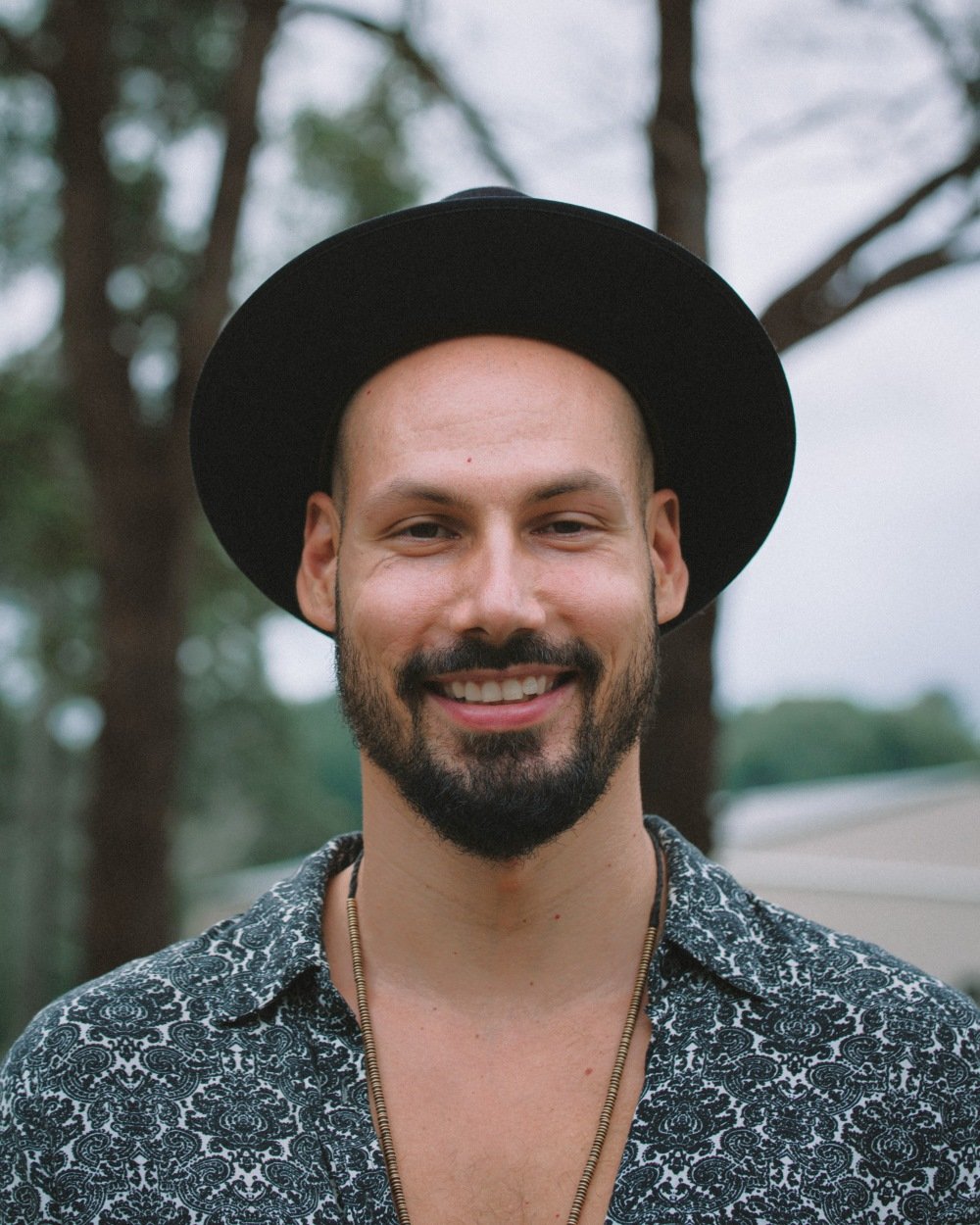
Serdar spent most of his life living with insecure attachment and complex PTSD before doing the work to become securely attached himself.
That journey shaped the question he's built his career around: How does someone move from insecure to secure attachment styles? Not just in theory, but in how they love and relate.
This question initially took him deep into the science of attachment: years studying attachment disturbances in adults, the neurobiology of connection, and relational healing in complex trauma, alongside training in shadow work.
But he didn't just study this work. He lived it, doing the deep, unglamorous healing required to become securely attached himself. He brings his lived experience to his coaching, as he is equally invested in helping others achieve the same breakthrough.
He uses a process he trusts, because he's walked it himself and refined over years of guiding others through similar experiences. Serdar helps clients to understand the root of the pattern, including the preverbal wiring, the invisible barriers, the old survival strategies still shaping who they choose and how they love.

“Just to let you know, we’re eloping in a few weeks!! Thanks for everything you do, Serdar. You really taught me how to communicate in a healthy way with my partner and I think that’s the core of a relationship’s foundation”
1:1 In-Depth Coaching
This work is offered as a private coaching package, giving us enough time to recognise the patterns shaping your relationships, work with them as they arise, and practise different ways of responding.
The exact length and structure of your coaching package can be tailored to what you need, which we’ll discuss together during your discovery call.
Here’s how coaching with me works:
Intake Questionnaire
Before we begin, I invite you to fill in an intake questionnaire. This is a chance to put your thoughts, what you know about your relational patterns and what’s been playing out in your relationship into words. It can be incredibly helpful and empowering to put this into words for an objective third party (who’s in your corner), that isn’t your best friend or family.
1:1 Sessions
The sessions are held over Zoom for 60 minutes each time, and these are fully tailored to you.
We may spend the session voicing what you’re seeing, validating what you’re experiencing, or working directly with relational patterns and attachment wounds that are shaping your choices.
This may mean unpacking a conflict and finding a healthier way through it. It might mean role-playing your way through a fear of rejection or abandonment, so it has less power over you in real life. It might mean practicing how to effectively communicate feelings and needs, particularly when emotions are high.
Whatever the session looks like, it happens in a space that’s safe enough to be honest, and is always held with presence, calm and relational depth.
Between Sessions
Where appropriate, you may leave sessions with something to practice, whether that’s a pattern to watch for, a response to try differently, or a moment to catch before it catches you.
Some of what surfaces will resolve quickly, while others will take longer and unfold across several sessions.
“I’ve just finished 6 1:1 sessions with Serdar and appreciated how steady and calming his manner was no matter what emotional state I brought to the sessions. I found it deeply healing just being heard and seen by his reassuring, male presence.
Serdar shared practical techniques and role-modelled scenarios and embodied clear, empathetic relating…”
I Hold the Space, You Don’t Have to.
In these sessions, you’re not managing a family member’s reaction or protecting a partner from what you’re really feeling.
It’s just you, free to be fully honest with someone whose only job is to help you see clearly.
You don’t have to arrive with it together. I will hold the space, and that’s what makes vulnerability possible.
No pressure, no judgment. Just presence, at a pace you’re ready for, with the steadiness and relational experience to stay with what comes up.
“I noticed excellent questions gently asked, which followed acknowledgement feeling deeply seen and met where I’m at in every moment, and with deep presence, like an encouragement of that part of me. A meeting. A safe space for that expression and a gentle space to open to new experiences …”
Frequently Asked Questions
-
I work primarily with singles who want to understand and change the attachment patterns shaping who they choose and how they experience love.
But if you’re already in a relationship, this work can still be incredibly useful. In fact, having the relationship in front of you can make certain patterns easier to see and work with in real time — whether that’s recurring conflict, reactivity, difficulty trusting, or letting someone get close.
If you’re unsure whether your situation is a fit, we can talk it through on the discovery call.
-
This is coaching, not therapy, although it's informed by the same attachment science, trauma research, and relational theory that underpins good therapeutic work.
The difference is focus: therapy works broadly across your history and mental health. Coaching is specifically focused on your attachment patterns and how they shape your relationships, with a practical, forward-moving approach but not a clinical one.
Those currently navigating a mental health disorder should seek a mental health practitioner with a clinical focus.
-
It depends on what you want support with and what emerges as we work together. Some patterns begin shifting quickly, while others need more time to unwind and practise differently.
That’s why I work with clients through a package of private sessions rather than isolated one-off calls. We’ll discuss the right length and structure for you during your discovery call
-
It often incorporates both. Voicing things aloud, often for the first time, changes how you relate to them. But insight alone doesn't change behaviour. Sessions also involve practice, such as role-playing difficult conversations, rehearsing a different response to a fear or trigger, and working through real situations from your life so the shift isn't just something you understand, but something you can start to embody and do.
-
That's completely expected, and it's not something you need to prepare for. My job is to guide the session by asking the right questions, noticing what's underneath what you're saying, and helping you to find words for things you may never have spoken aloud.
You don't need to arrive with anything figured out.
-
Sessions are held over Zoom, which means you can work with me from wherever you are. There’s no travel required.
-
The goal is for you to develop a different way of relating. Because the work happens through practice and not just insight, what you learn tends to stay. You’ll begin noticing patterns, catching yourself in the moment, and choosing differently long after our session ends.
Most clients finish their coaching package when they experience a lasting shift. If you decide later that there’s something new you’d like support with, we can discuss what further coaching might look like.
The Ordinary in the Extraordinary
Your partner texts “thinking of you” in the middle of your Tuesday for no reason, and instead of your mind racing to decode it, you feel the warmth. It’s simple and uncomplicated.
You’re across the table from someone who’s consistent. They show up the way they say they will, and you actually let yourself believe it. You stop mistaking peace for boredom, or chaos for chemistry.
A slow reply or an unclear plan used to send you spiralling. But now when it happens you pause, breathe and choose your response. The moment passes before it escalates.
You feel their hand on the small of your back or hear them say something caring, and you let it land instead of flinching, deflecting or planning your exit.

“I feel so deeply met, seen, and supported by my partner in a way that I have never been available for before. Our communication and the way we move through conflict is so connected, and we stay on the same team. I regularly feel more secure and trusting. There is always more to work on, but I know I am available now for a deeper level of intimacy like I’m currently experiencing because of the work we did together.”